

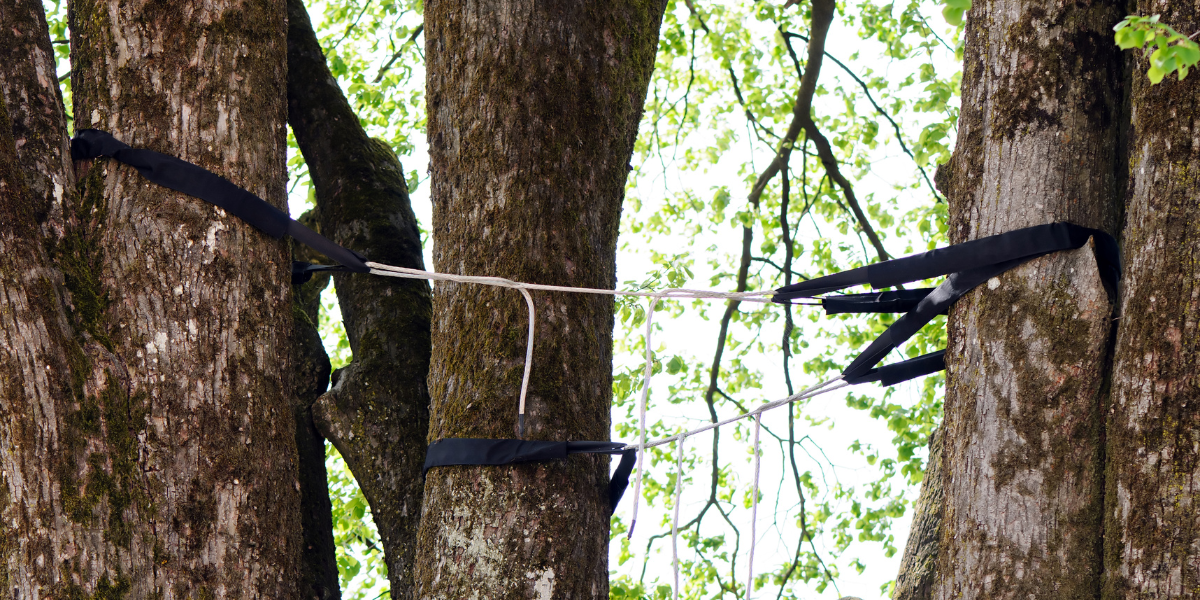
Tree Cabling and Bracing in East Brainerd, TN: When Support Beats Removal
A mature oak in your East Brainerd yard might look perfectly healthy from the ground, but a split trunk or a heavy leaning limb higher up can turn that same tree into a real risk during the next storm. The good news is that removal is not always the only answer. Tree cabling and bracing in East Brainerd, TN gives many structurally weak trees a second chance, supporting the parts that need it instead of taking the whole tree down.
This guide covers how cabling and bracing actually work, how to tell if your tree is a candidate, and what the process looks like when Tree Worx handles it for you. If you have been putting off a decision about a tree that just does not look quite right anymore, this should help you figure out your next step with a lot less guesswork.
What Cabling and Bracing Actually Do for a Tree
Cabling and bracing are two different tools built around the same basic goal: keeping a structurally weak tree from failing. Cables are flexible steel lines installed high in the crown to limit how far a codominant trunk or heavy limb can move in the wind. Braces are rigid steel rods installed lower down, through the wood itself, to hold a split or a weakly attached union together.
Cabling Explained
A cable does not force a tree into a new position. It simply reduces the distance a limb or trunk can travel before the cable takes up the slack, which lowers the strain on the weak point below. This works well for codominant stems, meaning two trunks growing from roughly the same spot, that could otherwise split apart under the weight of a full canopy or a heavy, wet snow.
Bracing Explained
Bracing goes further, physically tying two sides of a crack or a weak union back together with a threaded steel rod. It is typically used alongside cabling rather than on its own, since a brace addresses the existing damage while the cable prevents further movement that could make it worse.
When the Two Systems Work Together
Most of the trees we support in East Brainerd need both. A large, older shade tree with a split leader is a common example. The brace holds the split closed, and cables higher in the canopy keep new stress from reopening it. Your arborist will explain exactly which combination fits your specific tree, and why, in plain terms, before any work ever begins. Nothing gets installed based on guesswork or a one time glance from the ground.
How Do I Know If My Tree Needs Cabling or Bracing?
A few warning signs are worth a call. Look for two or more trunks growing closely together from the same base, cracks running along the bark, or a visible split at a branch union. A tree that has always leaned slightly is usually fine, but one that develops a new lean, or starts dropping bark near a fork, is worth a professional look. Large limbs that overhang your roof, driveway, or a neighbor’s fence deserve extra attention too, since the consequences of a failure there are higher.
You do not have to diagnose it yourself. A free consultation with one of our certified arborists will tell you plainly whether cabling, bracing, pruning, or simply monitoring the tree over time is the right call for your property. We would rather recommend the least invasive option that actually solves the problem than sell you more work than you need.
The Cabling and Bracing Process at Tree Worx
We start by inspecting the tree in person, checking its overall health, the type of structural issue, and how much weight or wind exposure the weak point is likely to face. From there, our certified arborists draw on the same expertise behind our full lineup of tree services to recommend a specific system, sized and placed for that particular tree rather than a generic fix used on everything that walks through the door.
Installation
Installation typically means climbing into the crown to place cables at the right height and angle, or drilling carefully for a brace rod through sound wood. Our crews use hardware sized for that tree’s species and condition, since undersized equipment simply will not hold and oversized equipment can cause unnecessary damage.
What Happens After Installation
A cabled or braced tree is not something you install once and forget about. We recommend periodic checkups to confirm the hardware is still doing its job as the tree continues to grow, since bark and wood can grow around cables over time. We will tell you plainly when a system needs adjusting rather than letting it go unchecked and unreliable. Most homeowners are surprised how little maintenance a well installed system actually needs between visits.
What It Costs
Every property and every tree is different, so pricing depends on the size of the tree, how many support points it needs, and how difficult access is on your lot. We do not believe in guessing games around cost. A free, in person estimate spells out exactly what work is recommended and what it will run before you commit to anything. There is no obligation attached to that estimate, and no pressure to say yes on the spot.
Does Cabling or Bracing Hurt the Tree?
When installed correctly, cabling causes minimal harm since the cables attach through hardware placed in the crown rather than wrapped tightly around limbs. Bracing does require drilling through the trunk or limb, but it is a controlled, precise process designed to address damage that is already present rather than create a new problem.
The University of Tennessee Extension’s guidance on tree support systems notes that cabling and bracing are appropriate tools for structurally weak trees when installed and maintained correctly, though the hardware is intrusive enough that arborists weigh a tree’s overall health and value before recommending it. That matches how we approach it here. Support systems are a tool, not a default, and we will tell you honestly if a tree is a better candidate for pruning or removal instead.
How Long Do Tree Cables and Braces Last?
A properly installed system can last many years, but it is not permanent. Hardware loosens, trees grow around fittings, and conditions change, so we recommend a checkup every couple of years to make sure everything is still doing its job. Skipping those checkups is one of the most common reasons a support system fails right when it is needed most.
If you already have cables or braces installed by another company and are not sure of their condition, we are happy to take a look and give you an honest read on whether they still meet current standards. Older installations sometimes use outdated hardware that no longer fits how the tree has grown, and replacing it early is far cheaper than waiting for a failure.
Conclusion
A structurally weak tree does not automatically mean a tree that has to come down. Cabling and bracing give East Brainerd homeowners a real middle option, one that protects the tree, your property, and your peace of mind without resorting to removal as the first move. The key is catching the warning signs early and getting an honest opinion before a small crack becomes a much bigger problem.
If you have a tree that looks like it could use some support, our East Brainerd tree care team can take a look and tell you plainly what it needs. Reach out today to schedule your free consultation.


